
IP67 vs IP68 Power Banks
IP67 vs IP68 power banks explained, with three rugged examples from our reviews and what the rating does not cover.
 By GadgetsDiary Editorial Team
Updated November 12, 2026
Safety: Power banks contain lithium-ion cells. Use the cables the manufacturer supplies or recommends, keep the unit away from heat and open flame, follow the temperature range in the manual, and never use a damaged or swollen battery.
IP67 and IP68 look almost the same on a power bank listing, but they are not identical. This guide explains the difference and uses three rugged banks from our reviews as examples. See more options in our Camping Power Banks category.
We compared the ratings as the manufacturers state them for the INIU Outdoor Rugged, the ELECOM NESTOUT 15000 and the ASWAYKE 20,000mAh. Ratings are manufacturer claims and should be confirmed in the manual.
At a Glance
| Rating | What it means | Example from our reviews |
|---|---|---|
| IP67 | Dust-tight and able to survive temporary immersion in up to 1 meter of water for 30 minutes | INIU Outdoor Rugged, ELECOM NESTOUT 15000, BLAVOR Rugged |
| IP68 | Dust-tight and able to survive continuous immersion under conditions set by the manufacturer | ASWAYKE 20,000mAh, listed at 1.5 meters for 30 minutes |
| Award | Product | GadgetsDiary Score About GadgetsDiary ScoreThe GadgetsDiary Score is our own rating from 0 to 10, based on performance, design and build, ease of use, and value. It reflects independent research and is never influenced by manufacturers, retailers, or affiliate commissions. Learn more › | Price | |
|---|---|---|---|---|
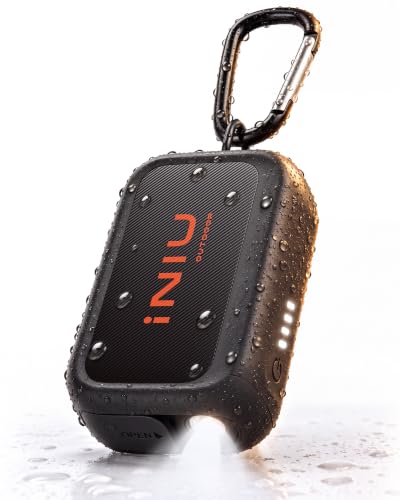 INIU Outdoor Rugged 10000mAh Portable Charger |
$59.99 | Buy | ||
 NESTOUT Rugged Power Bank |
$66.99 | Buy | ||
| Best Overall |
 ASWAYKE 20,000mAh Rugged Power Bank with |
$49.99 | Buy |
INIU Outdoor Rugged 10000mAh Portable Charger
NESTOUT Rugged Power Bank
ASWAYKE 20,000mAh Rugged Power Bank with
How an IP Rating Works
The first digit covers dust and solids and the second covers water. A rating without a first digit, such as IPX7, states water only. Higher numbers mean more protection within each scale, but the rating conditions differ by manufacturer, so read the fine print.
IP67 in Practice
The INIU Outdoor Rugged, the ELECOM NESTOUT 15000 and the BLAVOR Rugged all list IP67. The BLAVOR listing adds that the lid must be fully tightened and the bank idle. IP67 suits rain, splashes and dropping the bank in a puddle.
IP68 in Practice
The ASWAYKE lists IP68 and says it survives 1.5 meters of submersion for 30 minutes if the ports are dried first. IP68 adds a margin for heavier exposure, such as a canoe trip, but the same cautions about closed ports apply.
What the Rating Does Not Tell You
A rating does not cover drops, cold or heat. Check the operating temperature range in the manual, and do not charge a wet or damaged bank. Ratings also assume the unit is in good condition, so a cracked case may no longer be protected.
Final Verdict
For most camping, IP67 is enough. IP68 adds margin for heavier water exposure. Choose by the rest of the bank: capacity, output, weight and extras. See the INIU Outdoor Rugged 10,000mAh 45W Power Bank, the ELECOM NESTOUT 15000mAh Rugged Power Bank or the ASWAYKE 20,000mAh IP68 Rugged Power Bank on Amazon.
Frequently Asked Questions
Is IP68 always better than IP67?
It states a higher water protection level, but the conditions are set by the manufacturer. Compare the stated depth and time.
Can I charge a power bank while it is wet?
No. Dry the ports first and follow the manual. The ASWAYKE listing specifically asks you to dry the ports.
Does the rating cover saltwater?
Listings usually do not say. Rinse with fresh water if the manual allows, and check the manufacturer guidance.
Does a rating mean it works in the cold?
No. Check the operating temperature range in the manual.
About the author

The GadgetsDiary editorial team compares portable power and charging products using manufacturer specifications and Amazon listing data. Read how we choose and rank products on our How We Review and Editorial Policy pages.