
6 Best Portable Power Stations for RV of 2026
Disclosure: GadgetsDiary earns a commission from qualifying purchases made through links on this page. Commissions do not affect how products...
 By GadgetsDiary Editorial Team
Updated November 9, 2026
Disclosure: GadgetsDiary earns a commission from qualifying purchases made through links on this page. Commissions do not affect how products are ranked. See our Affiliate Disclosure and How We Review pages. Safety: Power stations store a large amount of energy. Use the supplied cables, keep the unit ventilated, and follow the manufacturer manual. For any connection to an RV’s electrical system, follow the manual and applicable electrical code, and ask a qualified electrician if you are unsure.
Portable power stations for RV trips replace a noisy generator with a battery you can recharge from shore power, a vehicle or solar panels, and the right one depends on what you run on board. This guide compares six models from EcoFlow, Jackery, DABBSSON, PECRON, DYNESS and EBL, with capacities from 1843.2Wh to 3584Wh, for travelers who want quiet power for a refrigerator, a laptop or heavier loads.
We compared each model on capacity, rated output, outlets and ports, recharge options, weight and warranty, using the specifications in the Amazon listings. Browse more in our RV Power Stations category, and list the appliances you plan to run, including anything with a motor, before you decide, since startup surge often matters more than the headline capacity.
All Products Compared
| Product | Best For | Capacity | Rated Output | Outlets and Ports | Notable Feature |
|---|---|---|---|---|---|
| EcoFlow Delta 3 Max 2048Wh | Best overall | 2048Wh | 2400W, 3400W X-Boost | Not listed | Recharge to 80% in 1.13 hours |
| Jackery HomePower 3600 Plus 3584Wh | Large loads | 3584Wh | 3600W AC | Not listed | Wheels and telescopic handle |
| DABBSSON 2000L 2048Wh | Lighter 2048Wh class | 2048Wh | 2200W AC, 3300W surge | 6 AC, others not listed | 41 lb, 5-year warranty |
| PECRON F3000LFP 3072Wh | Many ports | 3072Wh | 3600W | 6 AC, 2 USB-C (100W), 2 USB-A (18W), car port, 2 DC | 13 ports |
| DYNESS 2048Wh 2400W Power Station | Mid-size RV use | 2048Wh | 2400W | 6 AC, USB-A, USB-C (100W), 12V car port | 4000+ cycles per listing |
| EBL 2400W 1843.2Wh Power Station | Compact alternative | 1843.2Wh | 2400W | 4 AC, 2 USB-A, 2 USB-C, car port, 2 DC | Wireless charging pad |
| Award | Product | GadgetsDiary Score About GadgetsDiary ScoreThe GadgetsDiary Score is our own rating from 0 to 10, based on performance, design and build, ease of use, and value. It reflects independent research and is never influenced by manufacturers, retailers, or affiliate commissions. Learn more › | Price | |
|---|---|---|---|---|
 EF ECOFLOW DELTA 3 Max Portable Power Station |
$878.99 | Buy | ||
 Jackery HomePower 3600 Plus Power Station, 3584Wh |
$1,875.64 | Buy | ||
| Best Value |
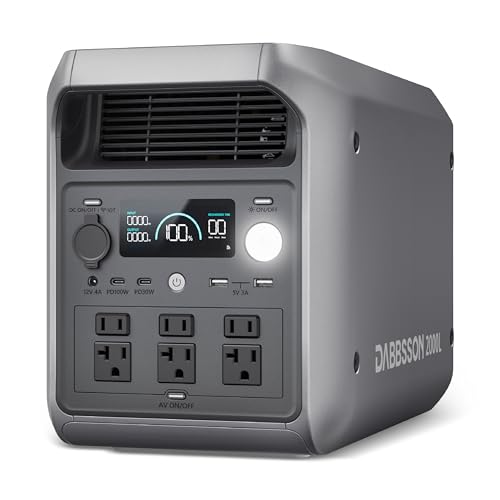 DABBSSON Portable Power Station 2000L |
$649.00 | Buy | |
| Best Premium |
 PECRON Portable Power Station F3000LFP |
$899.00 | Buy | |
| Best Overall |
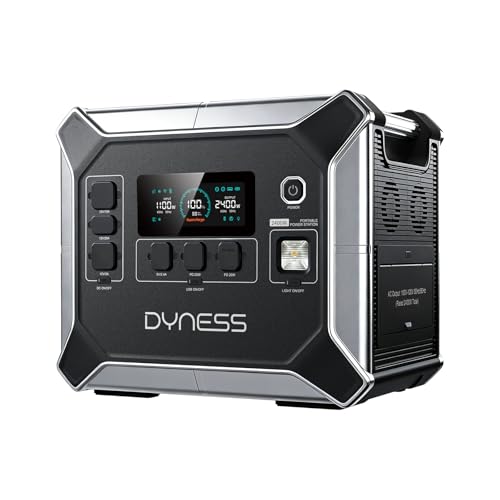 DYNESS Portable Power Station, 2048Wh |
$539.99 | Buy | |
| Best Budget |
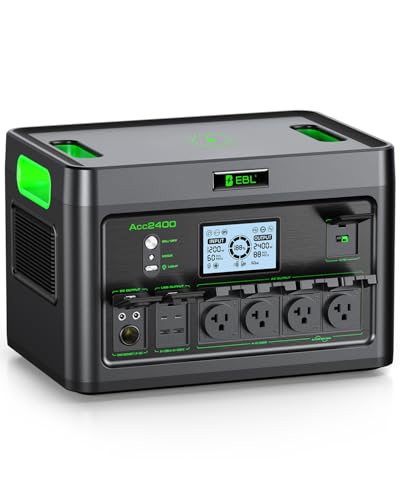 EBL 2400W Portable Power Station LiFePO4 Battery |
$559.99 | Buy |
EF ECOFLOW DELTA 3 Max Portable Power Station
Jackery HomePower 3600 Plus Power Station, 3584Wh
DABBSSON Portable Power Station 2000L
PECRON Portable Power Station F3000LFP
DYNESS Portable Power Station, 2048Wh
EBL 2400W Portable Power Station LiFePO4 Battery
Top 3 Portable Power Stations for RV Reviewed
#1 EcoFlow Delta 3 Max 2048Wh: Best Overall
Why We Picked It
The EcoFlow Delta 3 Max 2048Wh ranks first because it pairs a 2048Wh LFP battery with 2400W of output and a 3400W X-Boost mode, and the listing says that mode can run high-demand appliances such as refrigerators, microwaves and power tools. It also lists a transfer time under 10ms, which suits keeping electronics running if shore power drops.
Its listing states a recharge from 0 to 80 percent in 1.13 hours and the EcoFlow app for monitoring and schedules. Against the Jackery HomePower 3600 Plus, it lists lower capacity and output but smaller listed dimensions, and against the DABBSSON 2000L it lists higher output with the same 2048Wh capacity.
Key Specifications
- Capacity: 2048Wh, LFP battery
- Output: 2400W, 3400W in X-Boost mode
- Transfer time: under 10ms, per the listing
- Recharge: 0 to 80 percent in 1.13 hours, per the listing
- Size: 12 x 9.4 x 19.44 inches
| Pros | Cons |
|---|---|
|
|
Things to Consider
The 3400W figure applies to X-Boost mode, so check what that mode does and which appliances it supports before relying on it for something like an air conditioner. The listing gives no weight and no port list, so confirm both on the product page, especially if the unit will be lifted into a storage bay or compartment.
Best For
RV owners who want fast recharging and strong output in a 2048Wh unit, with an app for monitoring.
Skip It If
Skip it if you need the largest capacity or want published outlet and weight details before you buy, since the listing leaves both out.
See the EcoFlow Delta 3 Max 2048Wh on Amazon.
#2 Jackery HomePower 3600 Plus 3584Wh: Best for Large Loads
Why We Picked It
The Jackery HomePower 3600 Plus 3584Wh ranks second because it lists the largest capacity and, with the PECRON, the highest output in this guide: 3584Wh and 3600W AC, or 7200W when paired in parallel. For an RV with several heavy loads, that headroom is the main reason to carry the extra weight.
The listing describes dual voltage in parallel, a 6,000-cycle, 10-year battery life, and four charging options, including a full recharge in 2 hours with hybrid AC and DC input. Against the EcoFlow, it lists much more capacity but a listed weight of 77.16 pounds. Against the DABBSSON, it lists far more capacity and a higher listed weight.
Key Specifications
- Capacity: 3584Wh, LFP battery
- Output: 3600W AC, 7200W in parallel
- Recharge: 2 hours via hybrid AC and DC, 2.5 hours via AC, per the listing
- Cycle life: 6,000 cycles, per the listing
- Size and weight: 15.2 x 12.2 x 19.3 inches, 77.16 pounds
| Pros | Cons |
|---|---|
|
|
Things to Consider
At 77.16 pounds, plan where it will sit and how you will move it in and out of the RV. The listing mentions pairing with a manual transfer switch for home use, so follow the manual for any connection to an RV’s electrical system rather than improvising one. Confirm outlet types on the product page, since the summary does not list them.
Best For
RV owners with heavy loads or long stays off shore power who value capacity over weight.
Skip It If
Skip it if you need a unit you can lift easily or only run a refrigerator and electronics, since the capacity and weight go beyond that need.
See the Jackery HomePower 3600 Plus 3584Wh on Amazon.
#3 DABBSSON 2000L 2048Wh: Best for a Lighter 2048Wh Unit
Why We Picked It
The DABBSSON 2000L 2048Wh takes third place because it lists a weight of 41 pounds, the lowest listed weight in this guide, alongside 2200W of AC output, a 3300W surge rating and six AC outlets. It uses semi-solid LiFePO4 cells, which the manufacturer describes as an upgrade in stability.
The listing states a full recharge in about one hour from AC, solar input up to 800W through MPPT, a car charging cable in the box, and an EPS switchover under 15ms. Against the EcoFlow, it lists lower output but a published weight. Against the Jackery, it lists far less capacity but a much lower weight, and its five-year warranty is spelled out as three standard years plus two extended.
Key Specifications
- Capacity: 2048Wh, semi-solid LiFePO4
- Output: 2200W AC, 3300W surge
- Ports: six AC outlets, other ports not listed
- Recharge: full in about one hour via AC, per the listing
- Size and weight: 11.2 x 18.3 x 8.9 inches, 41 pounds
| Pros | Cons |
|---|---|
|
|
Things to Consider
The extra two warranty years are described as an extended term, so read the conditions on the product page. The listing mentions flame-retardant housing and cell stability, which are manufacturer statements. Confirm port types beyond the six AC outlets, and check that 2200W covers your largest appliance, including its startup draw.
Best For
Travelers who want a mid-capacity unit they can carry and store more easily.
Skip It If
Skip it if you need capacity above 2048Wh or the highest output, since the Jackery and PECRON list more of both.
See the DABBSSON 2000L 2048Wh on Amazon.
How to Choose a Portable Power Station for RV
Capacity and Rated Output
Start with what you run. Add up the running watts of your refrigerator, laptop, lights and any heating or cooling, then check the startup surge for motors and compressors. Capacity in watt-hours decides how long you can run before a recharge, while rated output decides which appliances you can run at once. Air conditioners and electric heaters draw the most. Choose a unit whose output and surge rating clear your largest load, and treat runtime estimates as rough, because real use rarely matches a calculation.
Outlets and Ports
RV living often means several devices at once, so check the number and type of AC outlets, plus USB-C for laptops and a 12V port for vehicle accessories. Pure sine wave AC output suits sensitive electronics. If a listing leaves the ports out, confirm them on the product page. Do not connect a power station to an RV’s electrical system by improvised wiring. Follow the manual and applicable electrical code, and ask a qualified electrician if you are unsure. Safe wiring matters more than any spec on the page.
Recharge Options (Wall, Car, Solar)
RV trips offer several ways to refill: campground shore power, a vehicle charging port, a generator or solar panels. Compare AC recharge times and check the solar input range, including voltage and connector, so your panels match the unit. Vehicle charging is useful while driving but is usually slower than the wall. Some units need a separate adapter for solar or car charging, so read the listing closely and budget for any accessories you may need to buy separately.
Weight and Portability
Large batteries are heavy, and RV storage bays have limits. Compare listed weights and dimensions, and check whether the unit has wheels or handles. Decide where it will sit while in use and whether you will lift it often. Some listings give no weight or conflicting figures, so confirm them with the manufacturer before buying, and make sure the floor or shelf you choose can support the unit safely while the vehicle is moving, since a heavy unit can shift on rough roads.
Battery Chemistry and Safety
Many listings use LiFePO4 or LFP cells, chosen for long cycle life and thermal stability, and some quote a cycle count. Treat those figures as manufacturer claims. Use the supplied cables, keep the unit ventilated and away from heat, and never run it in a sealed compartment. Stop using it if it swells or overheats, and keep the manual handy for the manufacturer’s safety limits. For smaller needs such as phones and laptops, see our Power Banks or the wider Portable Power Stations section.
How We Evaluate RV Power Stations
We evaluate RV power stations by comparing manufacturer specifications, Amazon listing information and available buyer ratings. We weigh each model on fit for RV use, capacity, rated output, outlets and ports, recharge options, weight, safety information, warranty and value. Amazon does not supply ratings for these products through our data source, so the rankings rely on published specifications rather than review scores. Listings can be inconsistent or incomplete, so confirm capacity, rated output, outlet types and device compatibility for the exact model before you buy. Commissions do not affect rankings, and we update the guide when listings change.
Frequently Asked Questions
Can a portable power station run an RV air conditioner?
It depends on the air conditioner’s running and startup power compared with the station’s output and surge rating. Check the unit’s label first. The Jackery HomePower 3600 Plus 3584Wh lists 3600W AC output and 7200W in parallel, while the EcoFlow Delta 3 Max 2048Wh lists a 3400W X-Boost mode, which the manufacturer describes for heavier loads.
Can a power station be connected to an RV’s electrical system?
Only with the right equipment and the manufacturer’s guidance. Do not improvise by feeding power back through an outlet. Follow the manual and applicable electrical code, and ask a qualified electrician if you are unsure. Some listings mention transfer switches, but compatibility varies, so confirm it for your model and RV.
How does solar charging work on a long RV trip?
Solar panels feed the unit through its solar input, which has set voltage and wattage limits. The PECRON F3000LFP 3072Wh lists a solar input range, while the DABBSSON 2000L 2048Wh lists MPPT solar input. Match your panels to those limits, and expect output to vary with sun, season and shade.
Is it safe to use a power station inside an RV?
Follow the manual. In general, keep the unit ventilated and away from heat and flammable materials, use the supplied cables, and do not run it in a sealed compartment. Stop using it if it is swollen, damaged or very hot. Secure it so it cannot slide or tip while the vehicle is moving.
How should a power station be stored between trips?
Check the manual for the stated storage temperature range and charge level. In general, store it in a cool, dry place away from direct heat, and avoid leaving it in a closed vehicle in hot weather. Top up the charge periodically if the manufacturer recommends it, and inspect the unit before the next trip.
Final Verdict
The EcoFlow Delta 3 Max 2048Wh is the strongest overall option in this guide because it lists a strong 2400W output, an X-Boost mode for heavier loads, and a fast recharge, according to its listing. If you run heavy loads or stay off shore power for long periods, the Jackery HomePower 3600 Plus 3584Wh is the alternative to consider, at the cost of its listed weight. Whichever you choose, match the rated and surge output to your largest appliance, confirm the ports and weight on the product page, and follow the manual for any connection to the RV.
About the author

The GadgetsDiary editorial team compares portable power and charging products using manufacturer specifications and Amazon listing data. Read how we choose and rank products on our How We Review and Editorial Policy pages.